Gig Crawler
A co-op roguelite dungeon crawler with meta progression and extraction shooter elements, built on a deterministic multiplayer architecture.
Gig Crawler is a three-year project on which I have been the sole developer for most of its development. Built in Unity on top of Photon Quantum, a deterministic simulation engine, it is fully multiplayer: up to four players team up in procedurally generated districts, fight, loot and extract to keep their rewards. I worked across the whole game: mechanics and gameplay, weapons, interactables, chests and enemies, the procedural generation of the dungeon and its buildings, shaders and tech art, UI, custom editor tools, and both rendering and simulation optimisation.
- Year
- 2023 – 2026
- Area
- Game Development
- Stack
- unity, c#, photon quantum, multiplayer, procedural generation, shader, tech art
https://store.steampowered.com/app/3563000/Gig_Crawler/

Soul Modder
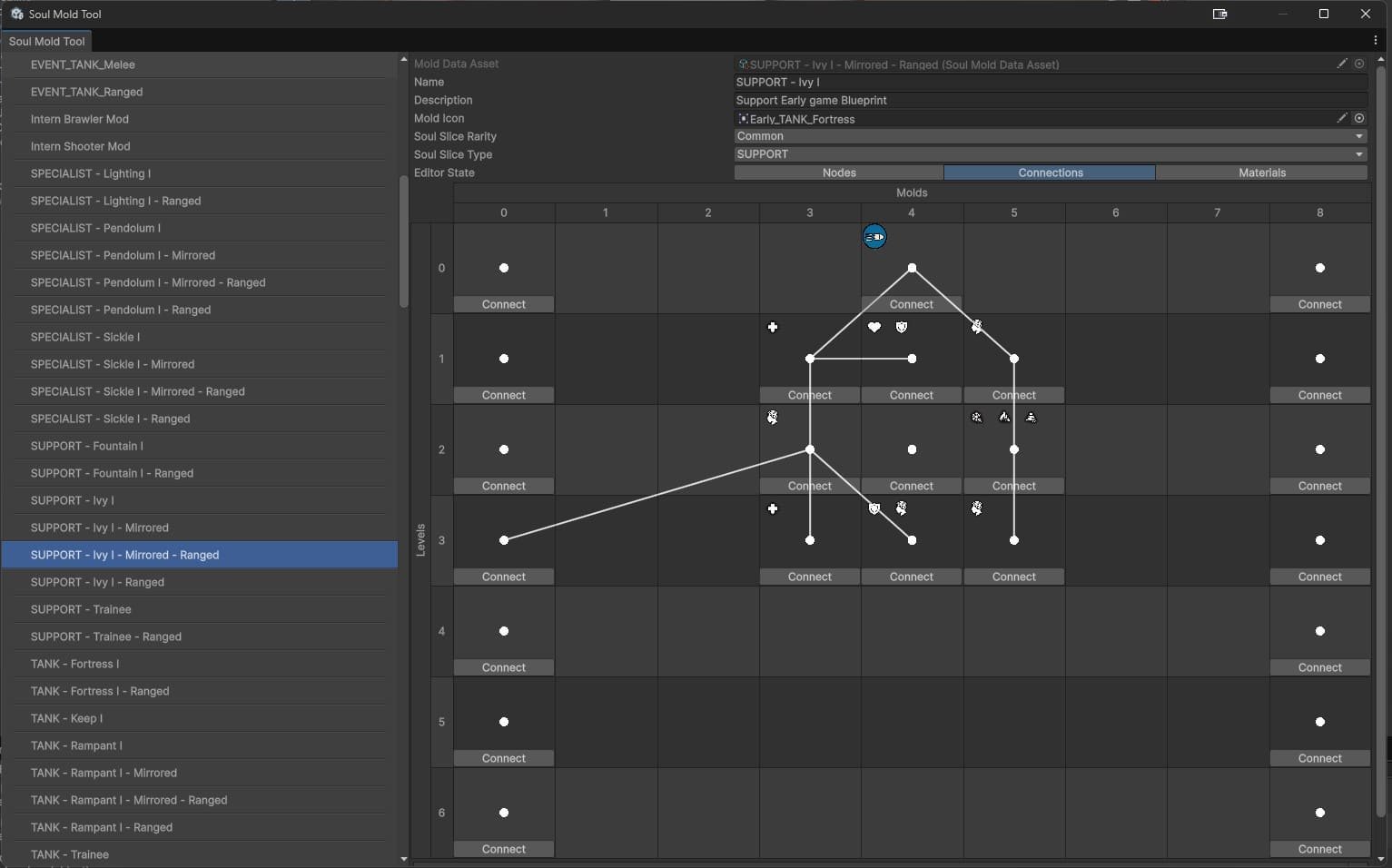
The core of the game: the Soul Modder is where players define their build. Soul slices for DPS, tank, special and support roles are slotted into the soul and connected together, and the resulting combination of stats and abilities is fully customisable by the player.

Deterministic Co-op Multiplayer
The gameplay runs on Photon Quantum, a deterministic, rollback-based simulation: every mechanic is written as fixed-point ECS systems so all clients stay in sync with up to four players on screen. Keeping the simulation lean and the rendering cheap has been a constant part of the work, optimising both logic and graphics.
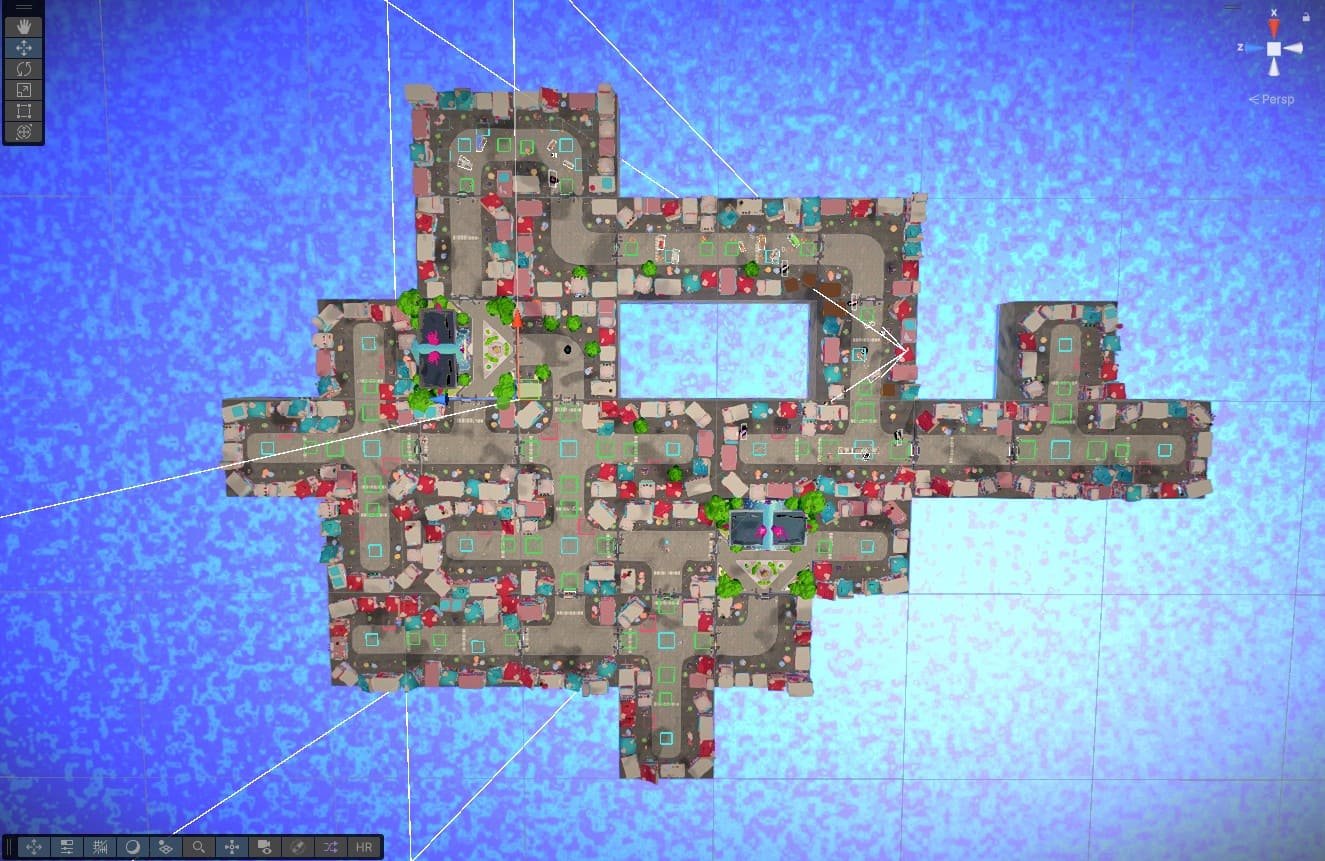
Procedural Dungeon
Each run takes place in a district generated procedurally: streets, blocks, objectives and spawn areas are laid out at runtime, so every mission has a different map while keeping a readable, city-like structure.
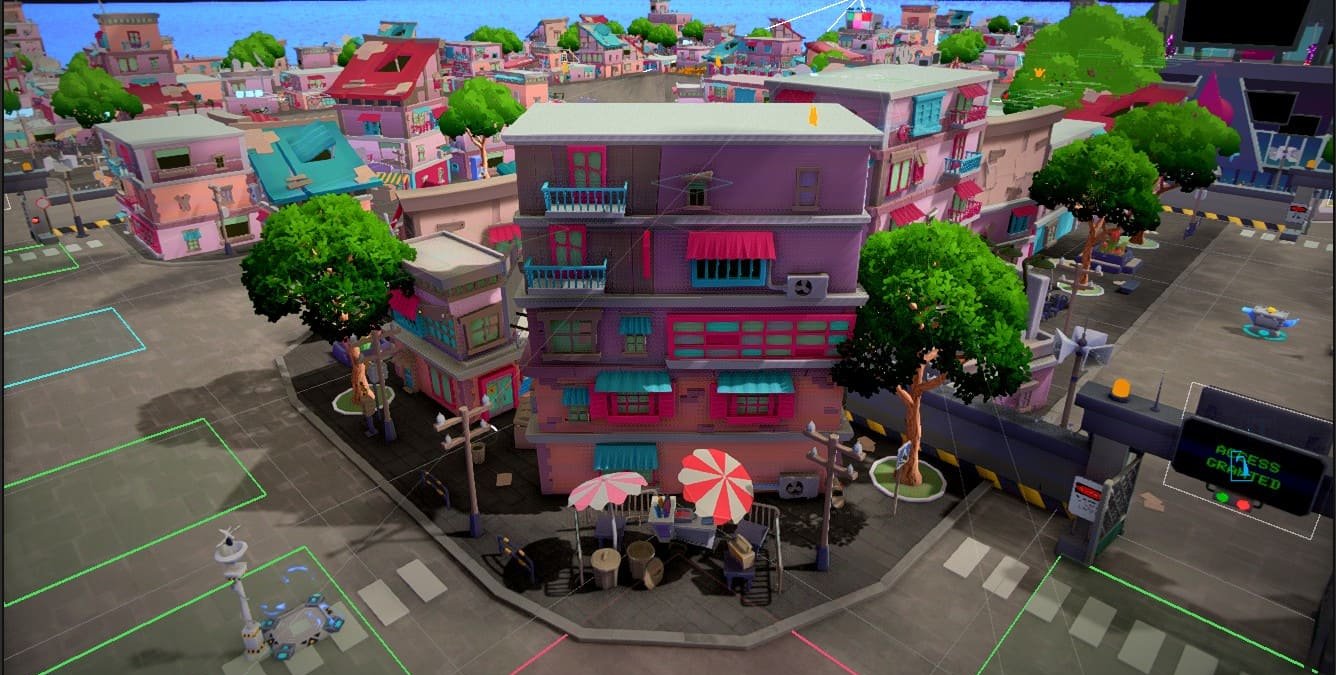
Procedural Decorations
Buildings and props are generated procedurally too: facades, balconies, awnings and street furniture are assembled around each block, giving the city variety without hand-placing every element.

Character Shader
I wrote the game's shaders, including the stylised character shader that drives colour variants and skins from a single set of materials.
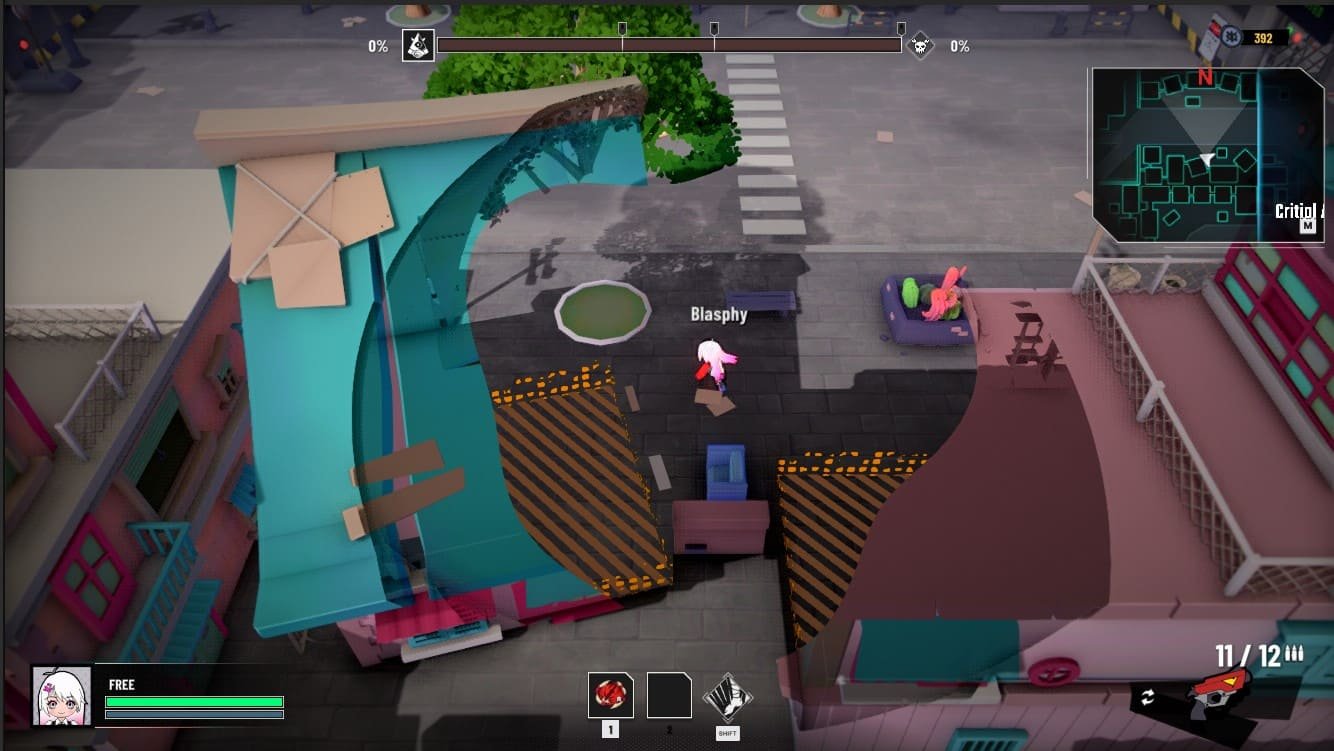
See-Through Shader
With a top-down camera, buildings often hide the player. The see-through shader dissolves the geometry between the camera and the characters, keeping them visible without hiding the whole building.
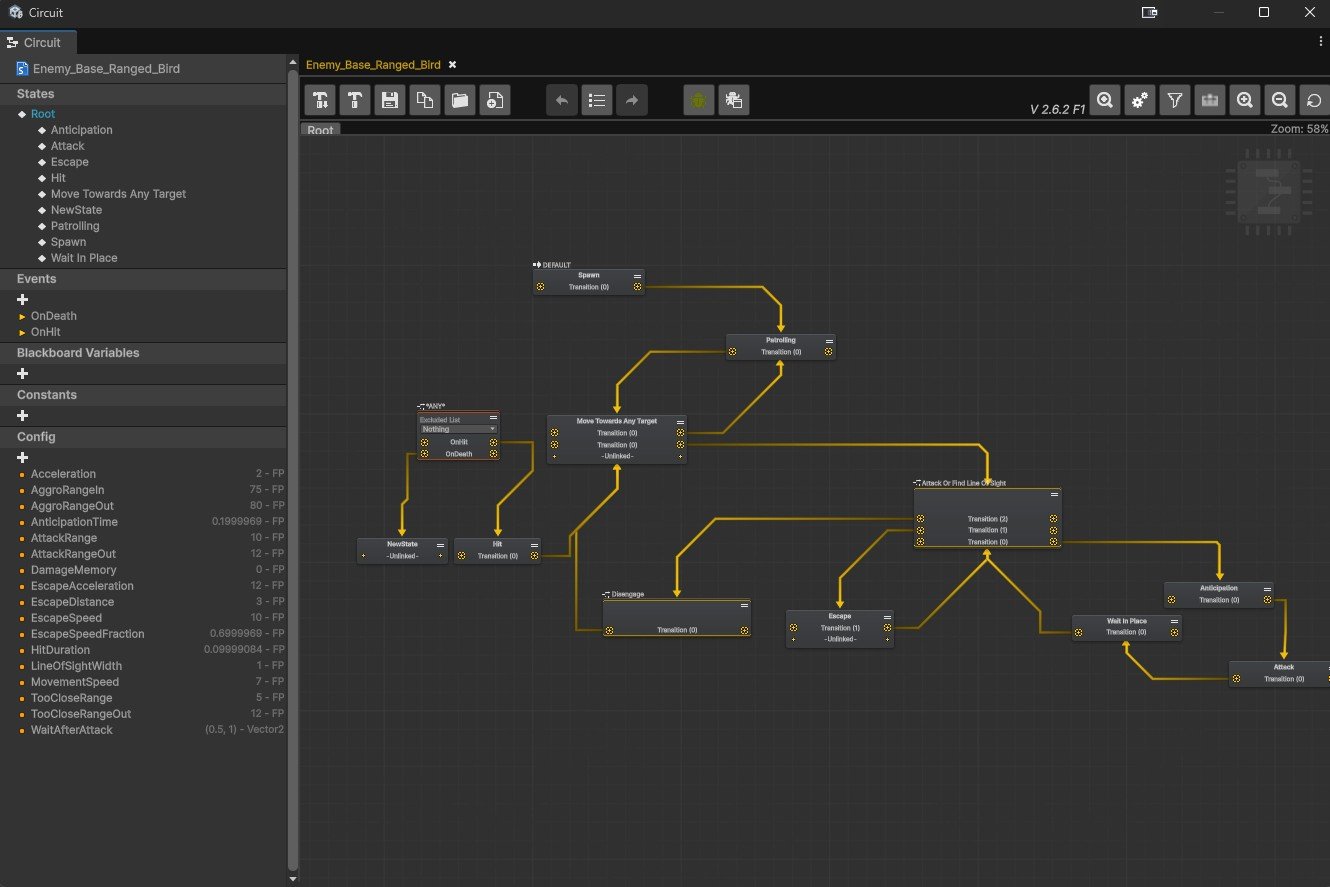
Enemy AI with HFSM
Enemies are driven by hierarchical finite state machines: patrolling, chasing, anticipation, attacking, escaping and reacting to hits are separate states, with per-enemy configuration values so new enemy types can be tuned without touching code.
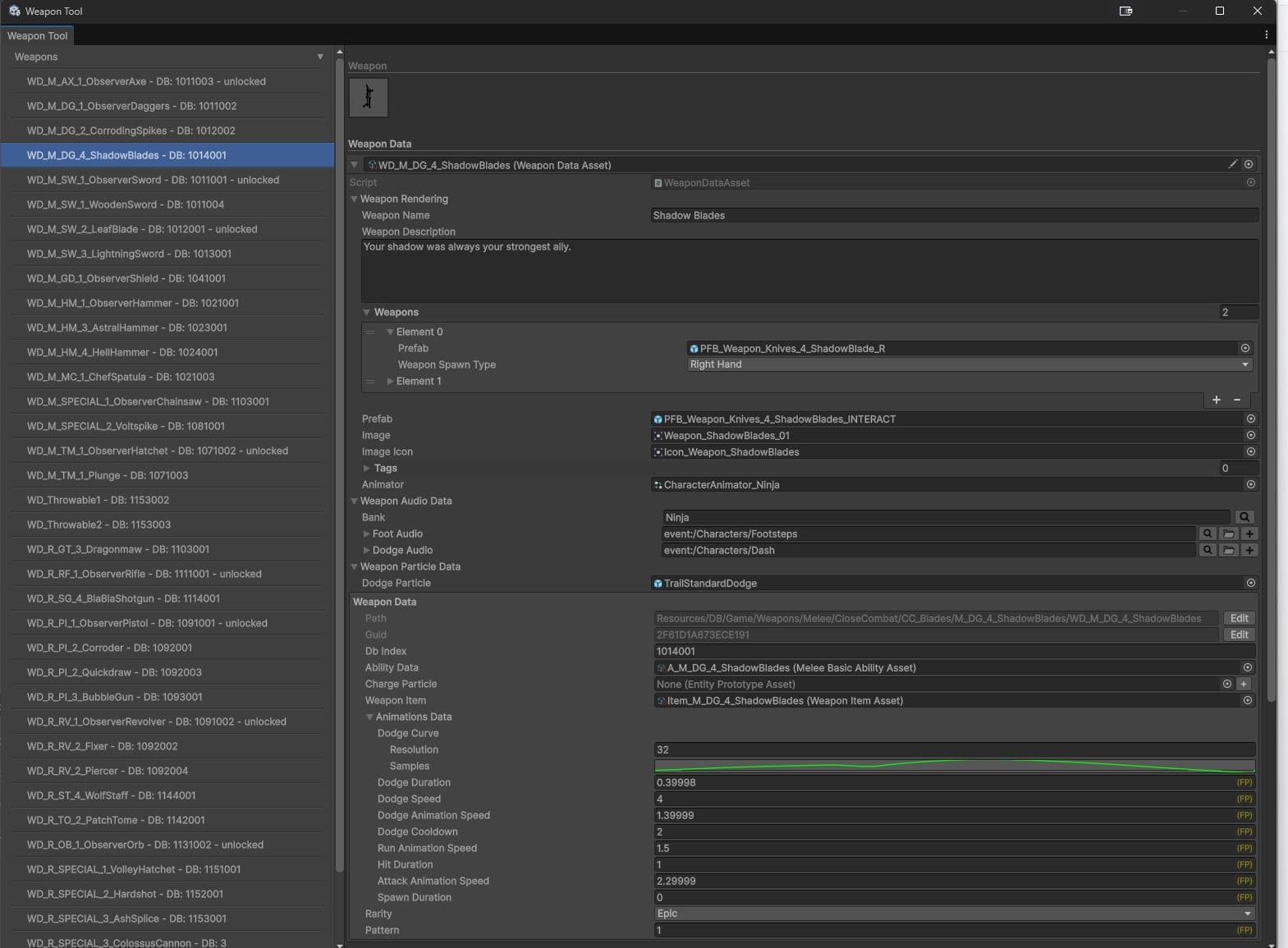
Weapons, Interactables & Chests
I built the weapon system together with interactables, chests and loot. Weapons are data-driven: rendering, audio, particles, abilities, rarity and animation timings are defined per asset and managed through a dedicated editor tool.
Custom Editor Tools
To let the team iterate on content I developed custom Unity tools, such as the Soul Mold Tool used to design the node graphs, connections and materials of every soul slice that ends up in the Soul Modder.
All projects · Next project: A New Leaf Memories